Animation from America to Japan and Back
by David Hixon, © 2011
As early as 1915, Japan has been creating their own animations for public display. However, despite these early films, animation in Japan didn't really come into its own until after WWII. Anime as it is viewed today around the world really began with artists such as Osamu Tezuka, who created a series of manga which eventually became animated in a unique style. However, if it wasn't for the animation from other countries and artists, in particular Walt Disney, he may never had inspired the anime genre as we know it.
 I will explore the international influences that shaped anime into what it is today, and how that unique animation style has begun to affect mainstream media throughout the world. Many people believe that the essence of anime has changed due to western influences, but I argue that western influences have always been strong in Japanese animation, and it is this clash of cultures that creates what is exciting and different. I will begin by exploring how Western artists have influenced Japanese animators, focusing specifically on the works of Tezuka Osamu. I will then explore the ongoing influences that go between eastern and Western artists, and how the cultures of these artists have begun to globalize. I will finish by showing how the Japanese style of animation has invaded what we watch in theaters and on television today around the world.
 The roots of anime really begin with early animators from America and Europe, such as Blackton and McCay. In fact, by 1915, there were 21 foreign animations played nationally in Japan. Both American and German artists, such as John R. Bray, the Fleischer brothers, and Lotte ReinigerIt, were strong inspirations for early Japanese animators. A slew of animators emerged in Japan, including Shimokawa Oten, Kouchi Junichi, and Kitayama Seitaro, the earliest Japanese animators. While they pioneered the techniques and genre, there was little they produced which was particularly worthwhile. Shimokawa Oten was trained as a caricaturist and cartoonist before being hired by Tenkatsu Studio to animate specifically in the style of Émile Cohl, while Kitayama Seitaro was particularly experienced with the Western style of painting. Already, in the earliest years of anime, the Japanese style of animation was heavily influenced by the works of Western artists, not merely the techniques they pioneered. These Western style influences were not limited to the origin of anime and continued into the 1930's. Artists such as Ikuo Oishi broke away from other contemporary Japanese animators' styles, and modeled his characters after American animations such as Felix the Cat. Yokoyama Ryuichi founded the Otogi Studio in Japan after having fallen in love with animation through Walt Disney's Skeleton Dance, which aired in Japan in 1930. He created several animations and manga, and would appear in the Mainichi newspaper. He had the privilege to visit the Disney Studios in 1955, and met Walt Disney himself.
 In the 1930's and 40's, the many Japanese animations were made as propaganda films during World War II, which probably caused a strain on the animators in terms of inspiration. It seems likely that could they directly copy the styles of Western animators now that they were at war. And yet even during this troubling time, the animators would sometimes portray American soldiers as recognizable characters such as Bluto from Fleischer's Popeye as seen in Mitsuyo Seo's Momotaro, Eagle of the Sea released in 1943. Political references like this continued throughout the war and beyond. Even after the war, the government of Japan encouraged animators to make films that showed the possibilities of the West, such as the 1946 film by Masao Kumagawa, The Magic Pen. However, this had little to do with the style of the animation, and more to do with propaganda.
It wasn't until a medical student decided in the 1950's to try his hand at manga and eventually anime that the modern style of anime was born. Tezuka Osamu was privileged in his youth to have access to both manga and film, including animation. Tezuka is said to have watched films like Felix the Cat in his youth, and was also influenced by Disney films, and French New Wave Cinema. This lead to his unique way of looking at animation and manga as a cinematic experience in terms of film editing, camera work, and other cinematic devices. His love of art and film from around the world gave him a unique viewpoint into the world of animation. Even the character design of Astro Boy was an homage to the early Walt Disney character styles.

On the first day of 1963, Astro Boy (Tetsuwan Atomu) was aired in Japan, and in America soon after, which was during a time when there were limited channels and airtime on television. One of the more interesting facts about this relationship between America and Japan was that Astro Boy would regularly mirror the civil rights struggles in America of the day, adding to the relations between the two countries and furthering the expansion of anime into the American market. While Astro Boy started off roughly, it soon became a world famous show, spreading the art of Japanese animation early, and invading the homes of people around the world. Tezuka produced several more series both before and after Astro Boy, which made big waves in America and abroad. Of these, Kimba the White Lion (Jungle Emperor) was among the most popular on American television.

In1967, Yoshida Tatsuo's Speed Racer (Mach Go Go Go) was aired in America as well. It gained popularity on American television, and eventually the original manga it was based on was released to western audiences as well. It became an icon of Japanese animation in its own right.
We can clearly see here that the Japanese styles used in animation were heavily influenced by their American and Western colleagues since the earliest days of Japanese produced animations. These influences continued throughout the decades, culminating in the cinematic styles that Tezuka adopted. While it is clear that the origins of anime were influenced as such, the American audience was also being slowly introduced to the phenomenon known as Anime, and despite the often controversial and bizarre shows, it became engrained in the minds of future American film makers and animators.
 Astro Boy has been translated into over a dozen different languages, and Tezuka himself was one of the first Japanese artists to attend international festivals for comics and animations. He not only pioneered airing his shows in America, but around the world, and was critically recognized for his work. The influential styles of Japanese animation were not limited to Japan, and had already been seen by artists and future animators around the world. One film which shows this obvious cross-pollination of story telling and visuals is Disney's 1994 hit movie The Lion King. Many critics have pointed out the many similarities between this film and Tezuka's Kimba the White Lion. Kimba aired on American television stations in the 60's and 70's, and many of the animators who worked on The Lion King would have grown up watching Kimba on television. Critics have claimed Disney heavily “borrowed” from Tezuka, and controversy over the idea of homage versus plagiarism sparked.
While the films and animations of Japan continue to spread throughout the world, both the styles and culture of Japan spread with it. Historically, Japan has been heavily influenced by Western cultures, and yet continues to hold onto their own unique perspective and cultural identity. It is this mix of West meets East, tradition meeds modernization, that has shaped the very soul of modern day Japan. Japan is becoming a country of a globalized culture, where they struggle to find their own identity and a place to fit within the world. Anime is one way in which Japan has turned the tables, and allowed their art to influence other cultures more than their own, and yet it also conforms to many globalized standards.
Characters in anime productions are often depicted with large eyes, multiple colors of hair and eyes, and even skin. While the characters are not always intended to be from another country, they are more often than not Western looking, copying the styles and appearance of Western cultures and people. Characters often have blond, brown, or even red hair, as well as a slew of eye colors, which directly mimic these foreign people. On the other hand, many anime characters also sport blue, green, purple, or even pink hair, as well as red or purple eyes, and even blue or green skin. This seems bizarre, but is one of the defining characteristics of anime, and brings it out of any particular culture and into something all it's own. By adopting a non-Japanese, or even “stateless” look in the characters is part of what makes anime so easily acceptable by cultures around the world.

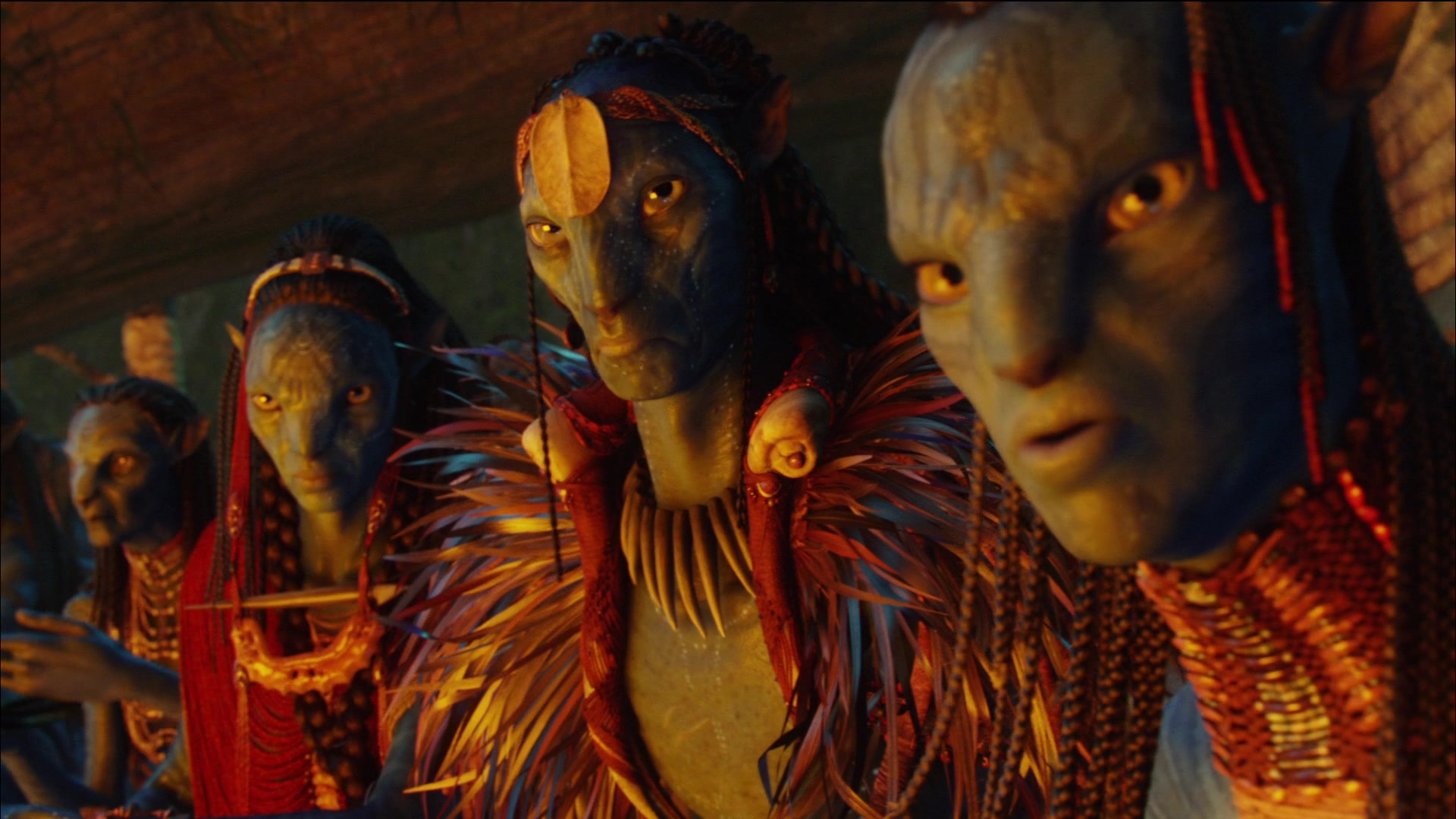
Such mixing of ideas and styles goes both ways. Several television shows and movies in America directly reflect the Japanese style, and even the anime characteristics that define it. Avatar: The Last Airbender is one such show. The directors and producers not only copied themes, styles, and designs as well as cultural references for their series from Japanese animation, but they also researched what studios to use, and chose a Korean studio that had previously worked on Japanese anime and were familiar with the style and demands of the process. And it is not alone. Several studios are adopting an anime style for certain shows, in order to reach the demographics they are looking for. They are not just trying to mimic the look either, they are looking to emulate the style to a point where it is impossible to tell the difference between “Anime” produced in Japan versus America, at least in terms of quality and story-telling. At the very least, studios are trying to take visual and stylistic cues, and leave the real anime style to the Japanese masters.
Many American and Japanese comics are already cross-pollinating, and both manga and anime are becoming less and less a product strictly of Japan, even if the primary demographic is Japanese. The majority of Japanese anime with Western money backing it seems to be from making sequels and projects that did poorly in the Japanese market. The West's desire to acquire or produce Eastern, and particularly Japanese art dates back to the 19th Century. Anime shows a mix of traditional Japanese art that was so fascinating to the people of the time, such as Kabuki and Woodblock Prints (Ukiyo-e), and modern and even experimental cinema and artistic tools.

While many American studios have shied away attempting to emulate the Japanese style, and others have tried to make it their own, there have been several projects developed that are joint-projects between Japanese and American groups. Warner Brothers Studios commissioned a series of short animations from various anime studios and producers in Japan on more than one occasion, each time with a different movie they are to be based on. Animatrix, released to home video in 2003, is a collection of short animations, each with a different Japanese director, focusing on telling more of the story of the Wachowski Brother's Matrix. Again in 2008, they released Batman Gotham Knight under the same pretense.
These collaborations have extended into full length films as well. Several remakes and re-imaginings of different anime and manga stories have been produced in America, and several more are in production and planning. In 2009, a mainly American produced version of Astro Boy was released to theaters, with some limited interaction and approval by Tezuka Productions. This followed the 2008 release of Speed Racer, and several other anime-to-live-action remakes. This trend, to turn anime into live-action films, tends to produce mixed results, and yet there are several more films in the works for the next few years.
Beyond remaking anime series and movies for a Western audience, either through live action or animation, the most notable influence of anime in western cinema is the style it inspires in original Western works. Blockbuster films, such as 300, The Matrix, Kill Bill, and even Up, and Ratatouille, are directly inspired by the cinematic and visual styling of anime. Kill Bill went so far as to include an animated sequence produced by a Japanese animation studio in the middle of the film. However, the most interesting influences are those between anime and animation.

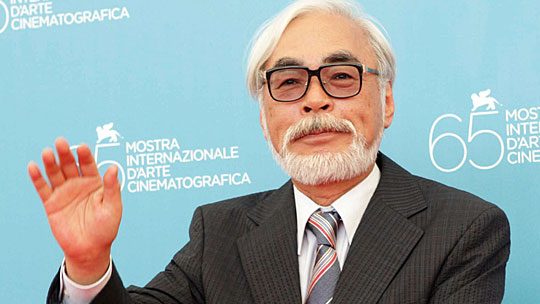 Hayao Miyazaki fell in love with animation in 1958, when he was in high school, and went on to create one of the most influential animation studios in the world. His first major motion film, which was Castle Cagliostro, made way for his much more epic masterpieces, such as Nausicaä of the Valley of Wind, that defined his style and the studio he started, Studio Ghibli. He was not a fan of Disney-style animation, in both the use of cinematography, and rotoscoping. He wanted to create a truly Japanese style of animation which focused more on the essence of animation in expression and motion, rather than smoothness of motion. However, he was still heavily influenced by western cartoonists such as McCay, Fleischer, Back, and Norstein. Because of his unique way of looking at animation, from writing the telling the story to the art style and visuals, his animations have influenced artists world wide.
Many artists, including those at Pixar Studios, grew up watching Miyazaki's films as a children, and continue to draw inspiration from him in their movies. Many have studied the drawings and animations Miyazaki made, and used what they could learn from him to his work in films like Up, and Ratatouille. Miyazaki himself became friends with John Lasseter of Pixar, visiting him at Pixar Studios on what Lasseter announced was “Miyazaki Day at Pixar”.
This type of international relationship between East and West are becoming more commonplace, and as a result, the highly stylized art and often adult and mature themes of anime have begun to spread globally and permeate cultures around the world. As a result, it can be said that Japan is losing its singular unique identity, but replacing it with a unique cultural identity of contrasting elements of society and art. Japan is both traditional and modern, conservative and edgy, and this contrast is reflected in the animation they have produced. As a result, it is easily accepted in many cultures around the world, and has influenced the artists, cartoonists, sequential artists, and filmmakers of tomorrow, and today. While the rest of the world struggles to keep up with the style of anime, the Japanese artists have drawn on inspirations from other cultures to make their art more unique and universal.
The future for anime is bright, and with international collaborations, it will prove to be even brighter. Anime was born from the unique perspective of Eastern artists studying Western art, while drawing upon their own past and experiences to support it. Thanks to efforts from artists such as Tezuka and Miyazaki, anime will continue to be an international influence on film, pushing the envelope and advancing what is possible on film, by unleashing the imagination.
Bibliography
Cavallaro, Dani. (2006). The Anime Art of Hayao Miyazaki. Jefferson, N.C.: McFarland & Co.
Drazen, Patrick. (2003). Anime Explosion! The What? Why? & Wow! Of Japanese Animation. Retrieved from
Kime, Chad. (n.d.). American Anime: Blend or Bastardization?. Accessed on October 9th, 2011. Retrieved from
Koyama-Richard, Brigitte. (2010). Japanese Animation: From Painted Scrolls to Pokémon. Paris, France: Flammarion.
Lamarre, Thomas. (2009). The Anime Machine. Minnesota, MN: University of Minnesota Press.
Lu, Amy Shirong. (2008). “The many faces of Internationalization in Japanese Anime”. Animation: An Interdisciplinary Journal. Retrieved from
Miyazaki, Hayao. (January 28th, 1988). “About Japanese Animation”. Course Japanese Movies 7: The Current Situation of Japanese Movies. Iwanami Shoten. Translated by Ryoko Toyama. Accessed on November 5th, 2011. Retrieved from
Napier, Susan J. (2005) Anime from Akira to Howl’s Moving Castle. New York, NY: Palgrave Macmillan.
Sharp, Jasper. (2004). Pioneers of Japanese Animation at PIFan. Accessed on November 5th, 2011. Retrieved from
Van der Lugt, Peter. (n.d.). Exclusive Interview with Pixar Storyboard Artist Enrico Casarosa. Accessed on October 9th, 2011. Retrieved from
Zahed, Ramin. (November 2004). “Astro Boy's American Cousins”. Animation Magazine, vol 18 (no. 11).
Filmography
Bender, Lawrence (Producer), Tarantino, Quentin (Director). (2003). Kill Bill Volume 1 [Motion Picture]. United States: Miramax.
Bird, Brad; Pinkava, Jan (Directors). (2007). Ratatouille [Motion Picture]. United States: Walt Disney / Pixar Animation Studios.
Black, Christopher (Executive Producer), Somers, Karen I. (Director). (2007). Anime: Drawing a Revolution [Television Documentary]. United States: Starz Entertainment.
Bowers, David (Director). (2009). Astro Boy [Motion Picture]. United States: Imagi Animation Studios / Imagi Crystal / Tezuka Production Company.
DiMartino, Michael Dante; Konietzko, Bryan (Producers). (2005). Avatar: The Last Airbender [Television Series]. United States: Nickelodeon Animation Studios.
Disney, Walt (Producer), Iwerks, Ub (Director). (1929). Skeleton Dance [Animated Short]. United States: Disney.
Docter, Pete; Peterson, Bob(Directors). (2009). Up [Motion Picture]. United States: Walt Disney / Pixar Animation Studios.
Fleischer, Max (Producer). (1933). Popeye The Sailor [Animated Short]. United States: Fleischer Studios/Paramount Studios.
Hanh, Don (Producer), Allers, Roger; Minkoff, Rob (Directors). (1994). The Lion King [Motion Picture]. United States: Disney.
Hidehiko, Takei; Yamamoto, Satoshi (Producers), Ishiguro, Noboru (Director). (1963). Tetsuwan Atomu (Astro Boy) [Television Series]. Japan: Mushi Productions.
Kumagawa, Masao (Director). (1946). Maho no Pen (The Magic Pen) [Animated Short]. Japan: Kyoto Eiga-sha.
Melniker, Benjamin; Thomas, Emma; Timm, Bruce W.; Uslan, Michael E. (Executive Producers). (2008) Batman: Gotham Knight [Animated Film]. United States: Warner Home Video.
Miyazaki, Hayao (Director). Katayama, Tetsuo (Producer). (1979). Rupan sansei: Kariosutoro no shiro (Lupin III: Castle Cagliostro) [Motion Picture]. Japan: Tokyo Movie Shinsha (TMS)
Miyazaki, Hayao (Director), Takahata, Isao (Producer). (1984). Nausicaä Of The Valley Of The Wind [Motion Picture]. Japan: Studio Ghibli, Disney.
Seo, Mitsuyo (Director). (1943). Momotaro no Umiwashi (Momotaro, Eagle of the Sea) [Animated Short] Japan: Geijutsu Eiga-sha / Zakka Films (USA distributor).
Tezuka, Osamu; Yamamoto, Eiichi (Producers). (1965-67). Janguru Taitei (Kimba the White Lion) [Television Series]. Japan: Mushi Productions / NBC Enterprises.
Tezuka, Osamu (Producer). (1967). Mach Go Go Go (Speed Racer) [Television Series]. Japan: Tatsunoko Productions Company.
Wachowski, Larry and Andy (Producers). (2003). Animatrix [Motion Picture]. United States: Warner Brothers.
Wachowski, Larry and Andy (Producers). (2008). Speed Racer [Motion Picture]. United States: Warner Brothers.
Supplemental Material
Anderson, Craig. (November 2009). Kimba the White Lion's Corner of the Web. Accessed on November 5th 2011. Retrieved from
Anime_Nanet. (n.d.). The Anime History - origin and roots from 1900 to the 21st century. Accessed on November 5h 2011. Retrieved from